Hello! My name is Adam and I am a first year event management student at University of Essex. My two long-term goals within the event industry are:
Be part of the planning for the World Cup, or Olympics
Give back, once established, to young professionals who will be in the position I am currently in.
I can't plan a major sporting event yet, but I can help fellow industry starters out with information that has helped me so far…
Getting started in events is confusing — most people don’t know where to begin, and a lot of advice online is vague or unrealistic.
This is exactly how I have started building experience in the events industry, step by step, while studying.
Everything here is based on what I’ve actually done — from volunteering at my first events to working on conferences, summits, and paid roles.
If you’re trying to get into events, this should give you a clear starting point and help you avoid wasting time.


How I Got My First Events
Instead of waiting for opportunities during my studies, I focused on getting involved in anything I could through volunteering.
I started by:
Reaching out to events and organisations directly
Applying for volunteering roles rather than paid positions
Saying yes to opportunities that gave me real, on-site experience
I probably sent over 100 emails and messages on LinkedIn trying to find event organisers are willing to take on volunteers.
Where To Find Your First Events
For me, I've had the most success by looking for events I found interesting on Eventbrite, finding out who is organising these events and then attempting to make contact via email or LinkedIn.
There are also platforms that can help find opportunities:
Volunteer Sphere
Agencies
Job boards
Getting your first event is one thing — progressing quickly is another. I focused on making the most out of every opportunity instead of just showing up.
What made the biggest difference:
Saying yes early on
At the start, I took on as many relevant opportunities as possible to build experience quickly, even if they were small or unpaid.Being reliable on-site
Turning up early, doing what was asked properly, and being someone organisers could trust made me more likely to be asked back.Taking initiative
Instead of waiting for instructions, I looked for ways to help — whether that was assisting with guest flow, supporting speakers, or helping solve small problems during the event.Building relationships
I spoke to people on-site — event managers, team members, and organisers. A lot of future opportunities came from simply staying in touch after events.Tracking everything
I kept a record of every event I worked on, what I did, and what I learned. This made it easier to build my CV, talk about my experience, and show progression.
That’s what turned a few initial opportunities into consistent experience and better roles.
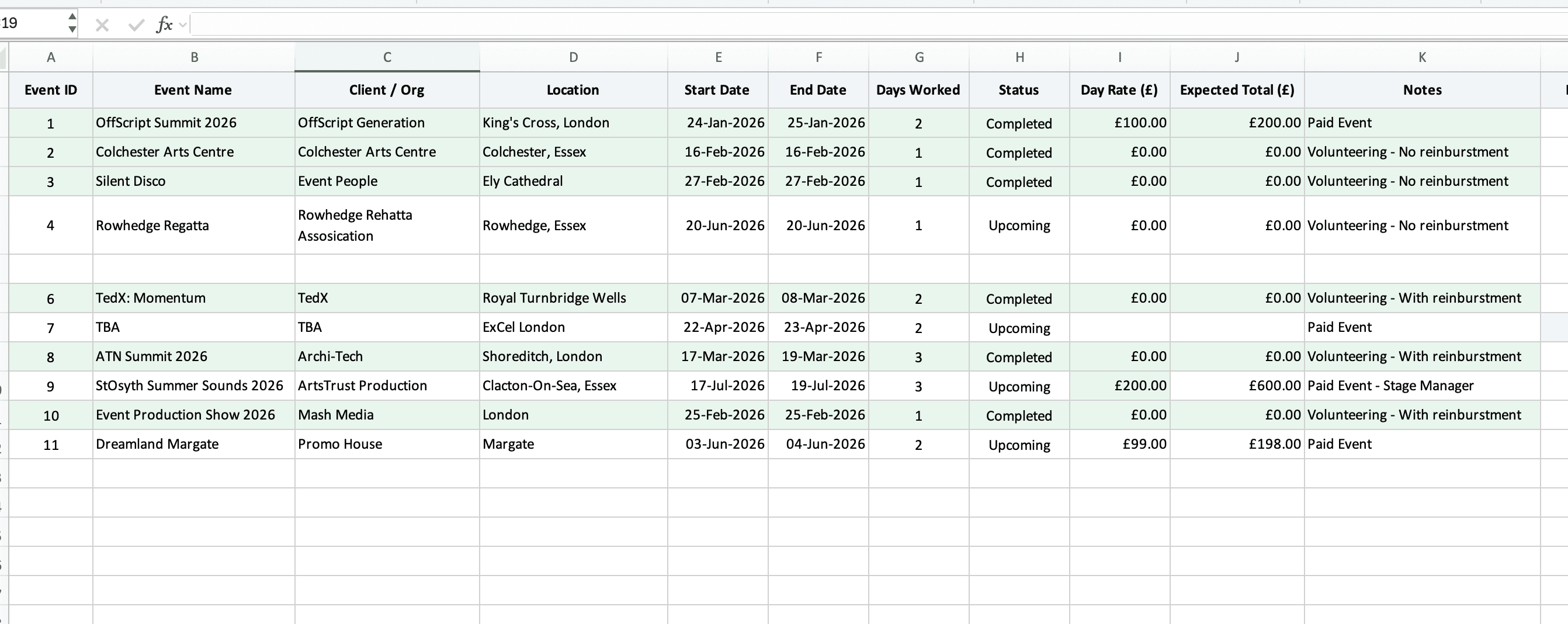
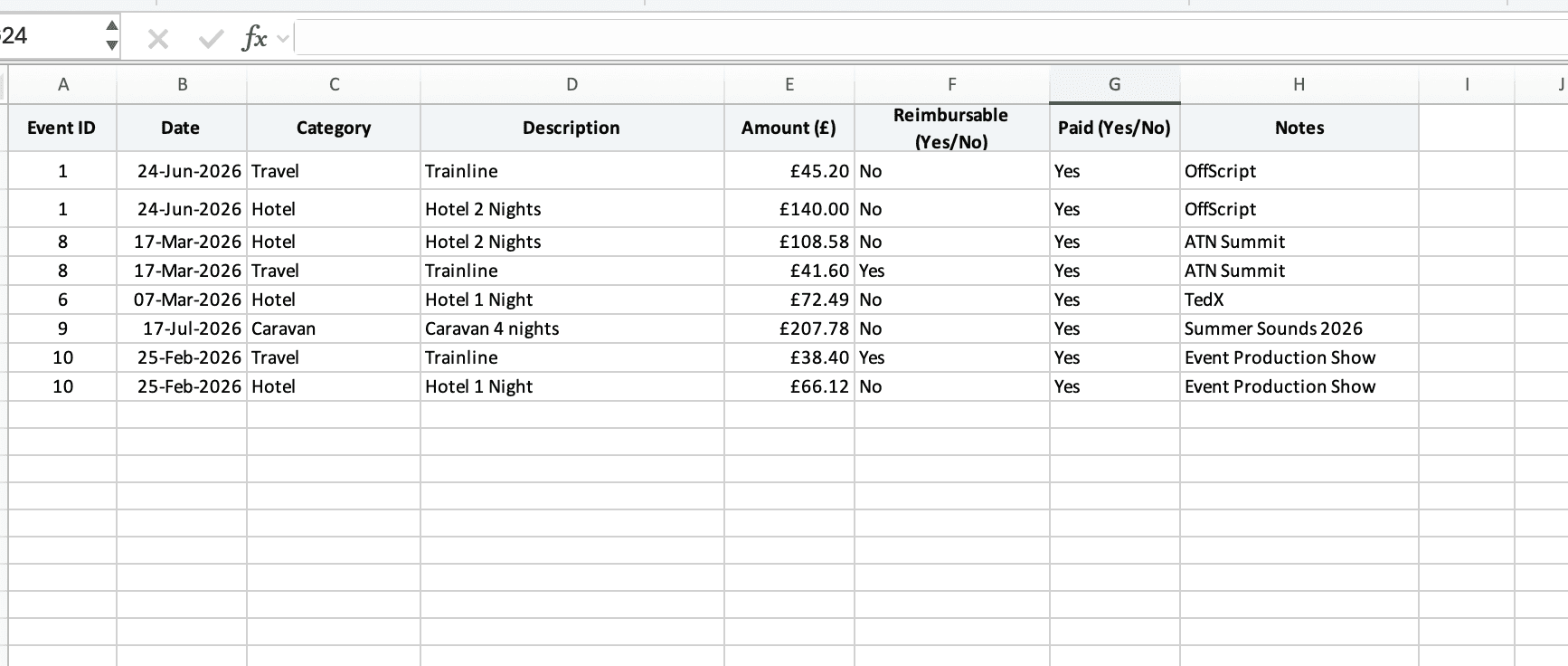
My Experience Tracking Spreadsheet
One of the biggest shifts came when I stopped looking for new opportunities — and started being asked back to events.
What made the difference:
Being reliable
Turning up early, doing the job properly, and not creating extra work for the team.Being easy to work with
Staying positive, communicating clearly, and fitting into the team on-site.Doing more than the minimum
Helping out where needed instead of sticking strictly to one task.Following up after events
Sending a quick message afterwards made a big difference in staying on people’s radar.
A lot of my later opportunities didn’t come from applications — they came from people I had already worked with.
That’s when things start to change.
Instead of constantly searching for the next event, opportunities start coming to you.
I have also created a group on LinkedIn to help share event opportunites, if you are interested in joining, feel free to reach out and I can add you! My LinkedIn is listed below.